History
At Foxfield, our curriculum allows children to construct a deep understanding of the past and how time periods and events fit together into stories of the past. Above all, we want our pupils to be passionate about history and develop a love of learning in this discipline.
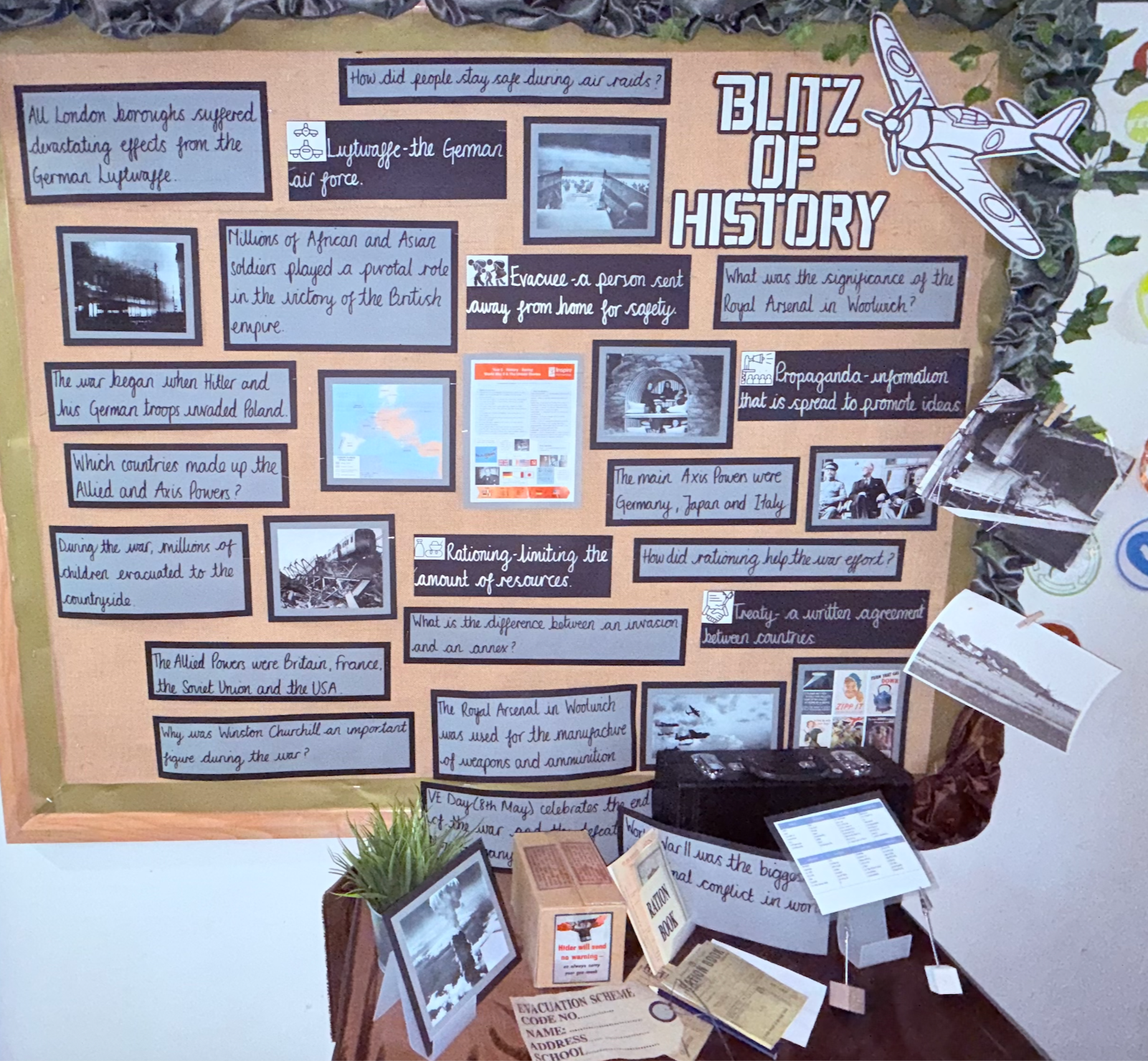
Central to this vision is a curriculum that acts as both a mirror and a window. It is intentionally designed to reflect the diverse identities of our school community, serving as a mirror where pupils see their own heritage valued, whether learning about the pivotal role of the Gurkhas in World War II to reflect our Nepalese community, or exploring the vital contributions of Black and Asian soldiers to honour our diverse community. At the same time, it serves as a window into the wider world, expanding their horizons and deepening their empathy for histories beyond their own.
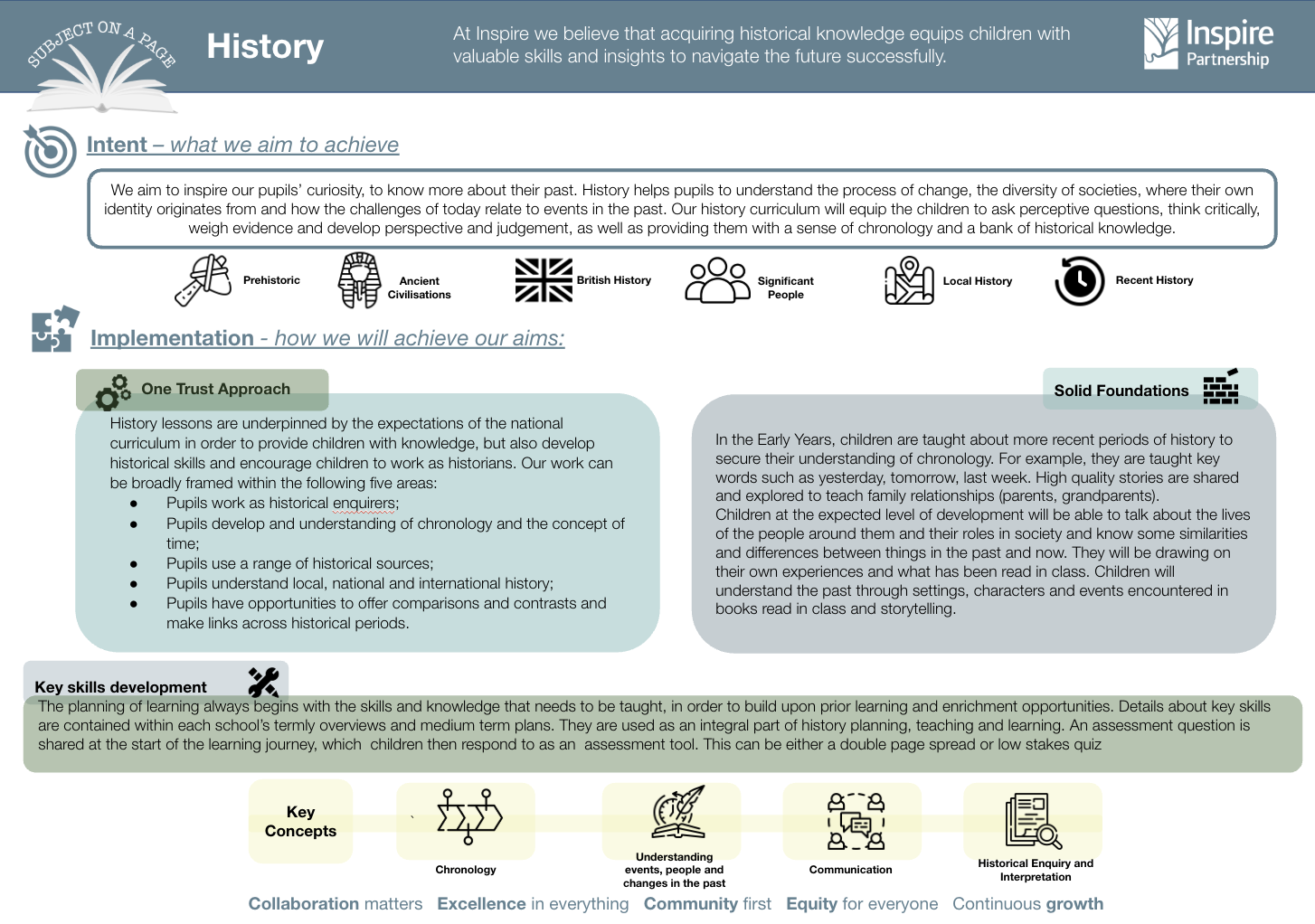
Our history curriculum encourages critical thinking, enhances children’s ability to evaluate evidence using a range of sources and to generate arguments. The curriculum is designed to develop the skills of wonder and curiosity, and inspires pupils to ask perceptive questions and be actively inquisitive. Links are carefully planned between history and our global curriculum themes, so that children contextualise their learning, make connections with prior knowledge and shape their understanding of the world on a local, national and global scale. The children are given opportunities to compare our modern world to the past, focussing on scale, duration and concurrence. History lessons are underpinned by the expectations of the national curriculum in order to provide children with knowledge, but also develop historical skills and encourage children to work as historians. Our work can be broadly framed within the following five areas:
- Pupils work as historical enquirers
- Pupils develop and understanding of chronology and the concept of time
- Pupils use a range of historical sources
- Pupils understand local, national and international history
- Pupils have opportunities to offer comparisons and contrasts and make links across historical periods
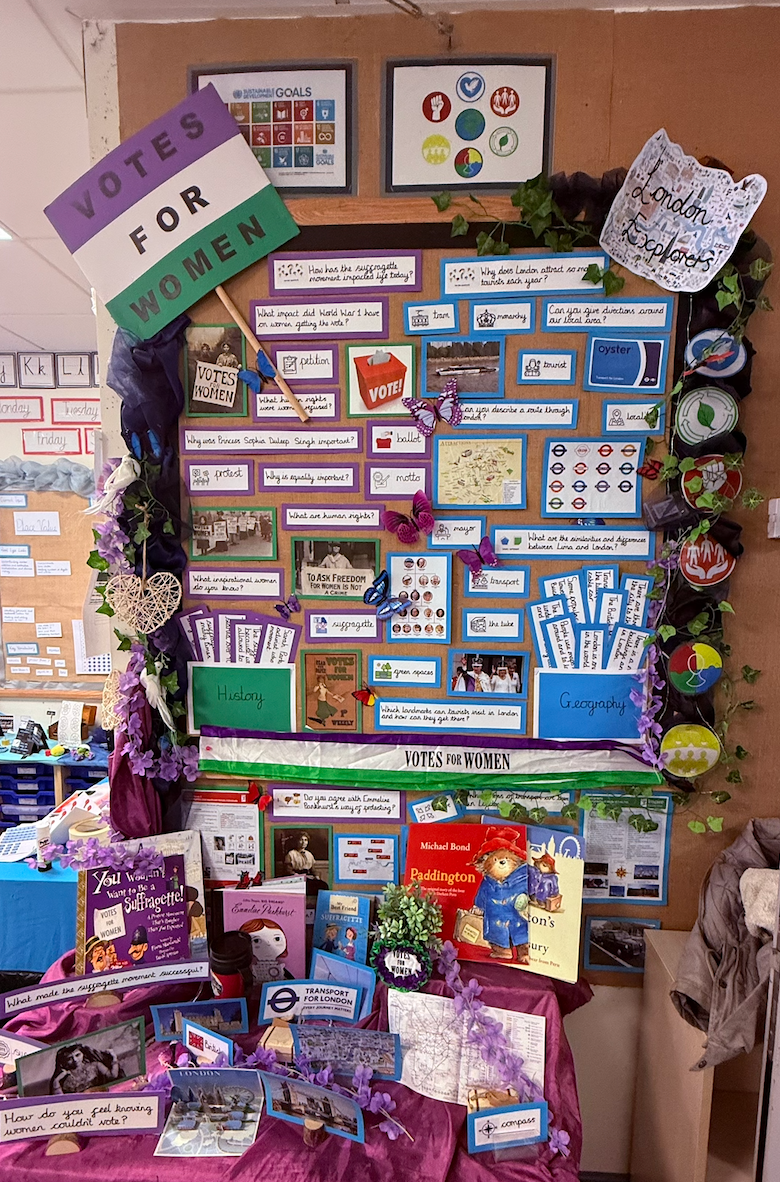
Children develop an understanding of the concept of time and the past in the Early Years Foundation Stage and build on this in Key Stage 1. Through skilfully planned learning journeys, children explore the characteristics of time periods; learning about people’s lives during the historical period as well as aspects including society, culture, economy, military, religion and politics. Each time period the children study is considered with a wider lens from those traditionally depicted with a focus on diversity and an appreciation of stories from different groups of people within the time period. For example, children will be able to explore ‘hidden histories’ such as the untold story of the black Tudors. As a result, children will understand the complexity of people’s lives in the past, the process of change and similarities and differences between challenges of the past and current times.
Children have the opportunity to use evidence and sources to gain further knowledge whilst evaluating the reliability of a range of primary and secondary sources. Children then move on to study the significance of historical events and time periods, the main achievements of the time and the follies of humankind within this period. A detailed chronology provides children with knowledge and understanding of Britain’s past and that of the wider world. Children establish clear narratives within and across the periods they study as well as events occurring elsewhere in the world during the same period. Within the learning journey, children will be able to form an opinion of this historical period or event, articulate whether their thinking has been challenged and further explore the opinions of others from the past to the present. Visitors and trips are a core aspect, providing an immersive context for learning, allowing children to explore historical accounts and sources.