
Maths at Foxfield
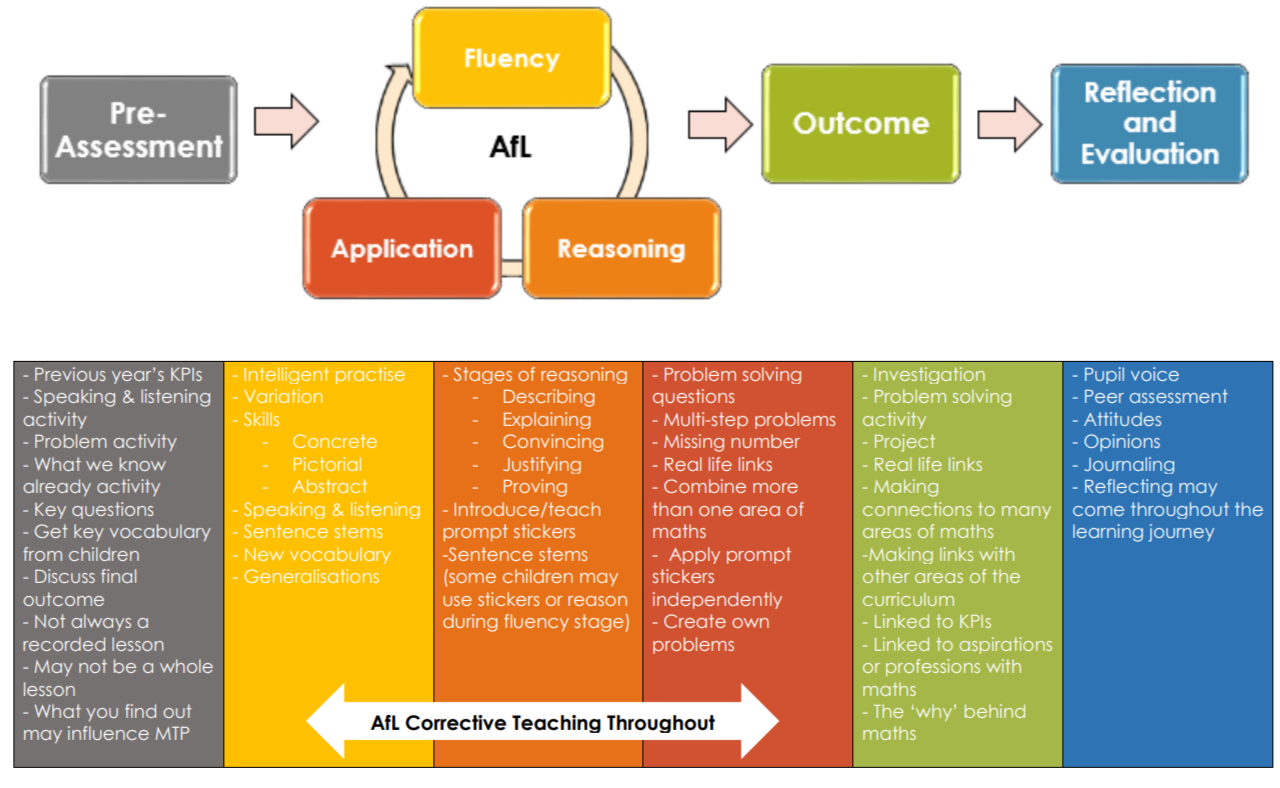
At Foxfield Primary School, we aim to ensure that all children develop a deep understanding of mathematics. We believe that foundational knowledge is the bedrock of mathematical success. To become fluent, children must develop a deep conceptual understanding alongside the ability to recall and apply knowledge rapidly and accurately. The intent of our maths curriculum is to implement a mastery approach to teaching and learning, where all pupils progress through the content at a similar pace using the Inspire Maths Learning Journey.
We are committed to developing curiosity in maths and its practical application in everyday life through methodical curriculum design and carefully crafted lessons and resources. Our goal is to ensure that all children have access to fluency, reasoning, and problem-solving skills, with a strong focus on developing both confidence and competence in mathematics.
To achieve this, we adopt a backwards teaching approach, emphasising deeper learning and mastery of the five big ideas, while also considering the individual starting points of children and allowing for practice and consolidation.
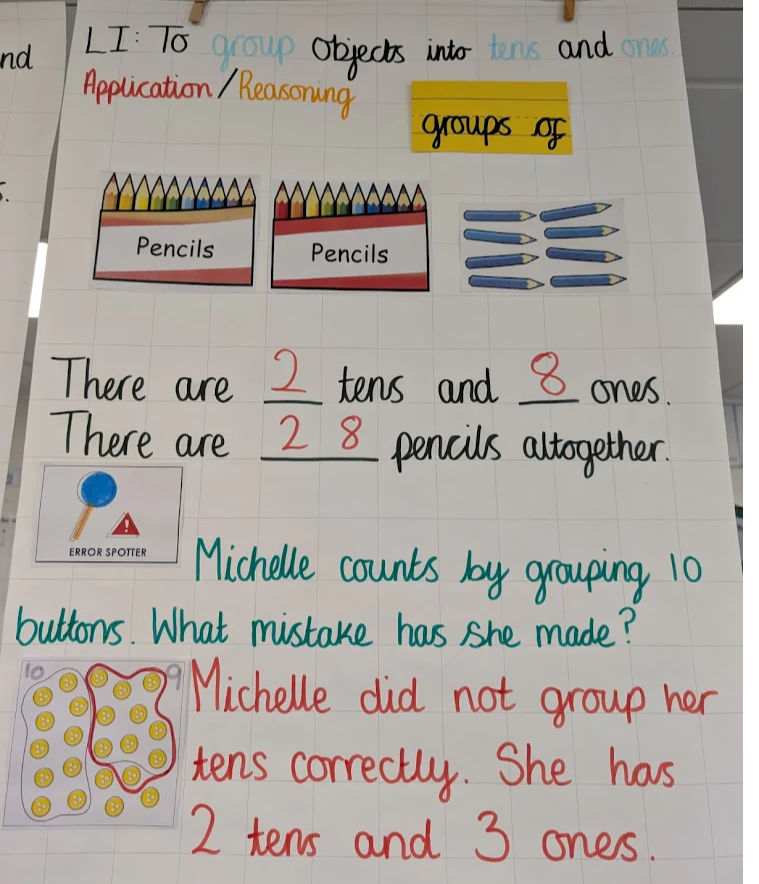
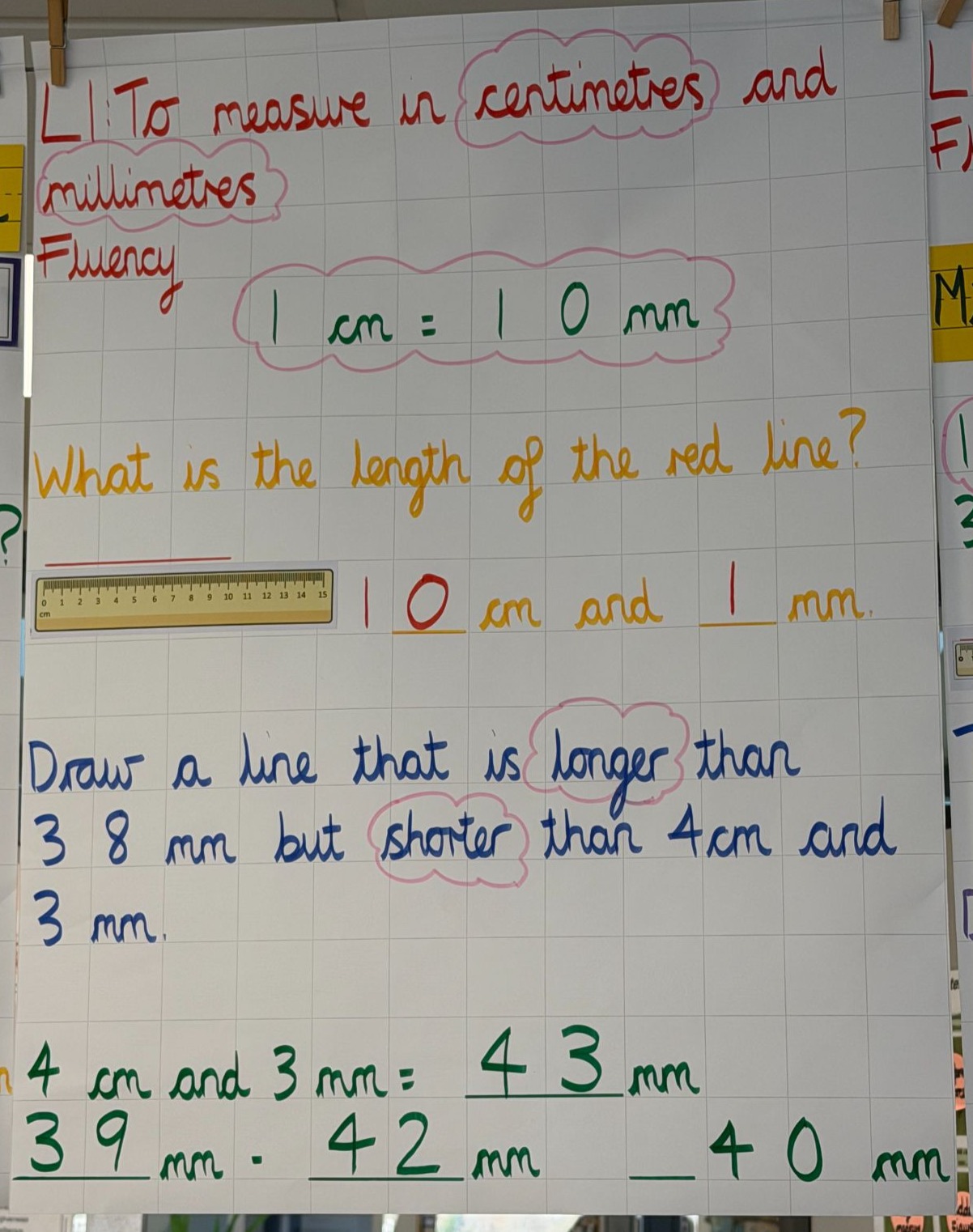
We know that efficient, accurate recall of key number facts and procedures is essential for fluency, freeing pupils’ minds to think deeply about concepts and problems, but fluency demands more than this. When children achieve fluency, they can recall core number facts and perform basic calculations with automaticity. This reduces the cognitive load during problem-solving, allowing the children to focus on more complex aspects of a problem. Fluency in maths builds pupils' confidence, as they feel more capable of tackling a variety of maths problems without hesitation.
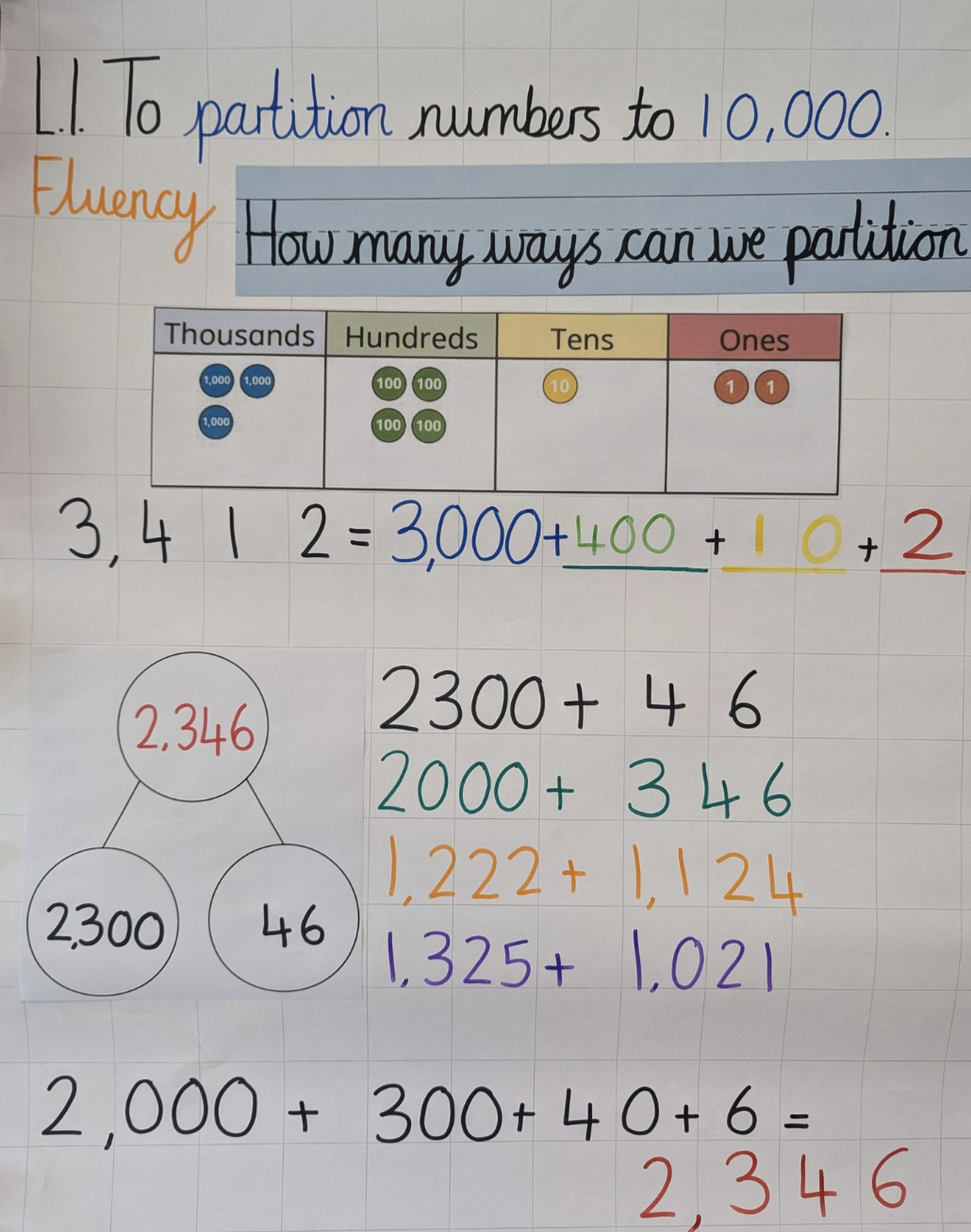
We ensure that children have a full understanding of mathematical concepts, methods, and relationships between the different areas of maths, such as addition, subtraction, division and multiplication. Modelling the learning clearly is a key feature of all maths lessons. Modelling the learning clearly is a vital step in bridging the gap between a new mathematical concept and independent mastery. During every maths lesson, teachers explicitly demonstrate the ‘how’ and ‘why’ of a process, breaking complex tasks down into manageable, bite-sized steps using visual aids, manipulatives, and live problem-solving. This high-quality demonstration and think-aloud explicitly shows pupils the exact mathematical vocabulary to use and the logical reasoning required to solve a problem. By making the inner workings of mathematical thinking visible and audible, teachers reduce cognitive load, and ensure every child has a crystal-clear blueprint to follow before they begin their own independent practice.
Underpinning the journey for our young mathematicians is practice and consolidation, taking into account children’s individual starting points. This journey plays a central role where learning is carefully designed to include variation, fluency development and key understanding of underlying mathematical concepts.
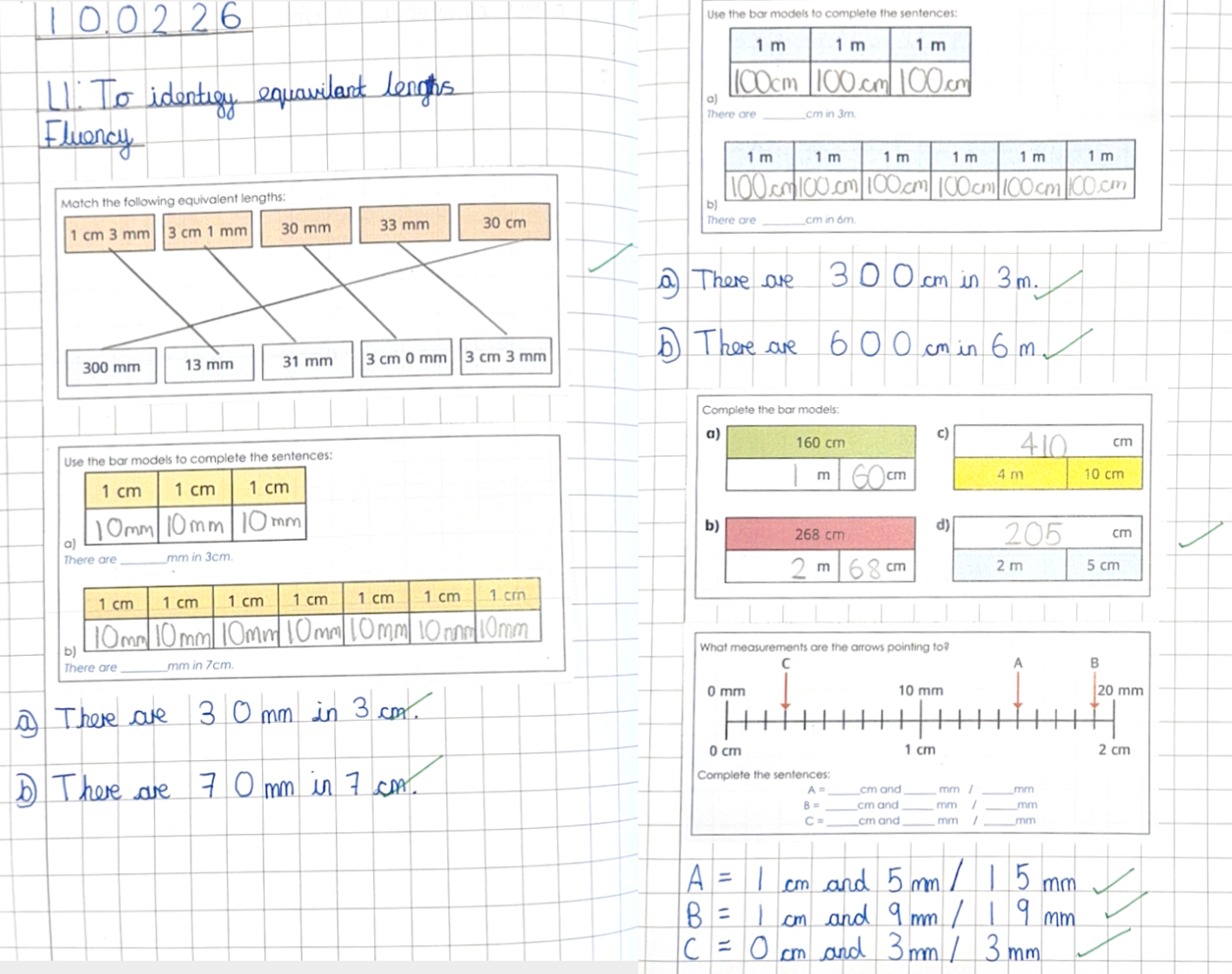
Impact and progress is assessed daily by the class teacher in which they will then decide what support or lessons the class or small groups of children will need to ensure all children achieve. Using our mastery approach, all children are exposed to opportunities of reasoning and problem-solving, where they become confident at using technical mathematical vocabulary and are able to think critically, allowing for debates and discussions about key concepts. Pupils are encouraged to coach others and take a collective responsibility for their learning. Real life learning is embedded in the curriculum, which allows our children to understand the importance of their learning and relate this to their everyday lives.
It is important that children can recall key facts in maths, as this will allow them to solve problems more efficiently. In order to develop children’s conceptual understanding of maths, we ensure that all teachers begin each unit of maths by starting with a pre-assessment of the concept, using materials such as number beads and Numicon, before moving onto calculation methods, and then into using real-life scenarios.
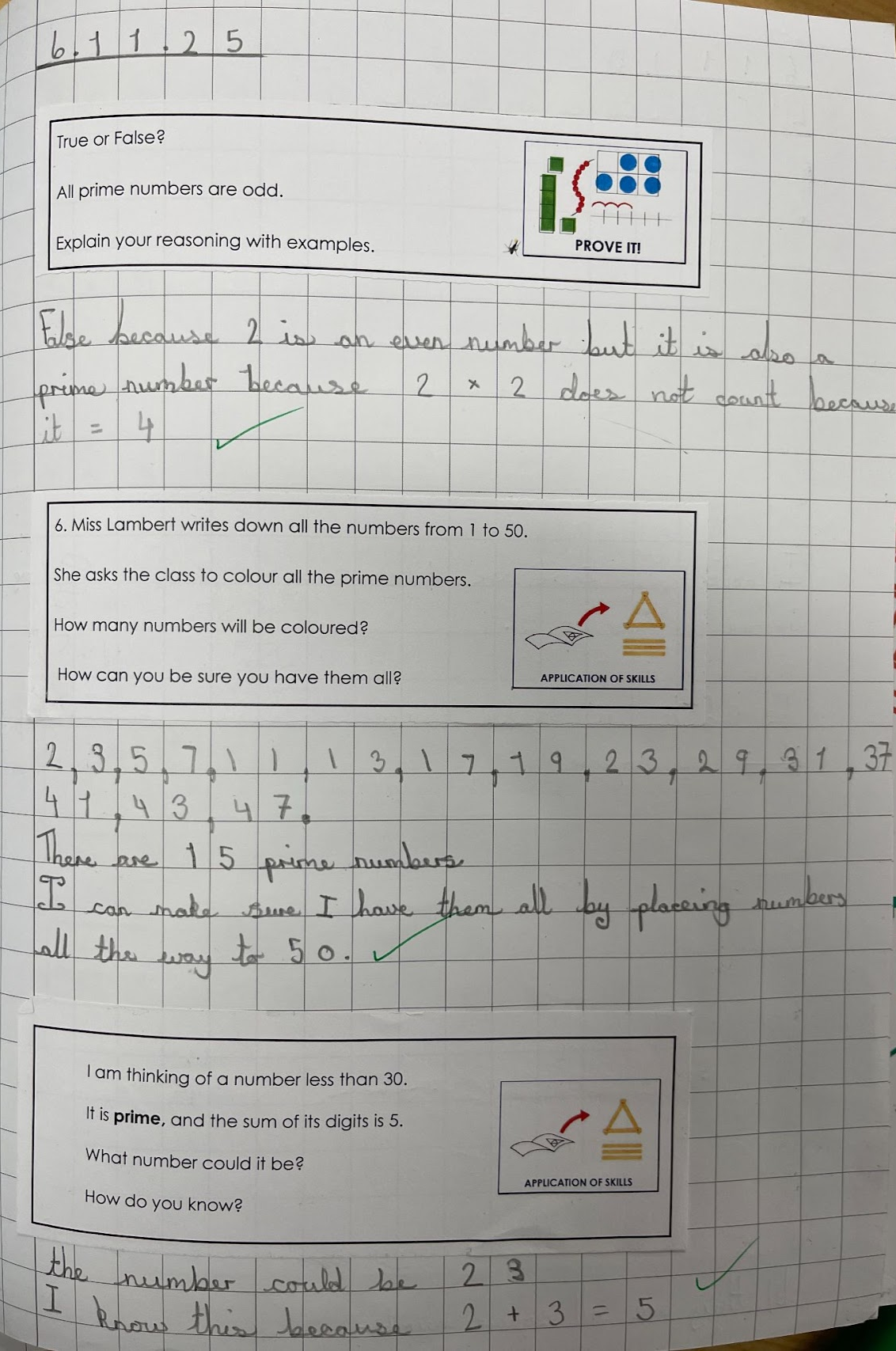
Children are provided with opportunities to express their mathematical reasoning through well-planned questions and tasks. Teachers recap prior learning at the beginning of a session, and ensure they address misconceptions throughout the lesson. We understand that mathematical language is crucial to children’s mathematical thinking and understanding. As a result, teachers explicitly teach vocabulary, which is clearly displayed on flip charts and on the maths learning wall.
At Foxfield Primary School, we believe that an integral part of maths is being able to solve problems. We ensure that real life problem-solving activities are planned into weekly maths learning.
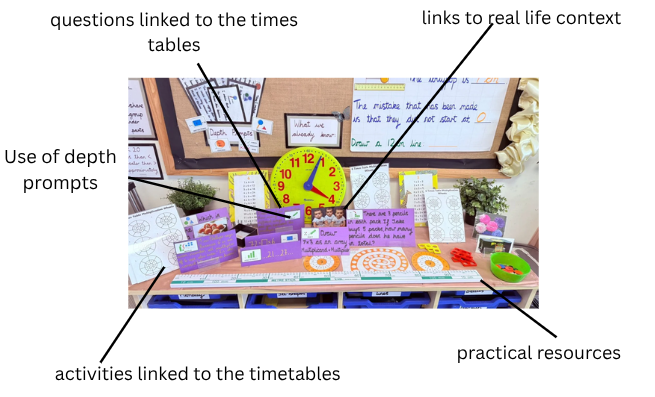
Each classroom has a multiplication table-top display so that children have additional opportunities to see and understand how numbers behave. Our multiplication tables are designed to highlight interconnected number facts and inverse relationships. When a child looks at the display, they don’t just see ‘4 X 6 = 24’ - they are guided to see a whole family of facts. Ensuring that multiplication tables are embedded across each year group, we secure the firm foundations every child deserves to become a capable mathematician.