
SEND Learners
At Foxfield Primary, we create a positive and supportive environment for all children without exception. We hold high expectations for every child, continuously asking ourselves, "What is it that we need to do differently in order to help this child access the learning and achieve success?" We view special educational needs as a difference or neurodivergence rather than a shortcoming or weakness, and we intentionally use language and terminology that avoids negative connotations or deficit-focused mindsets.
At Foxfield, we prioritise meeting each child’s wellbeing needs so they are in the right place emotionally to thrive and engage with their education. We foster independence and cultivate strong, positive relationships within our learning environment. Through effective and skilled management, we maintain physical spaces that are truly conducive to learning, carefully taking into account sensory needs to ensure every child feels comfortable and ready to achieve.
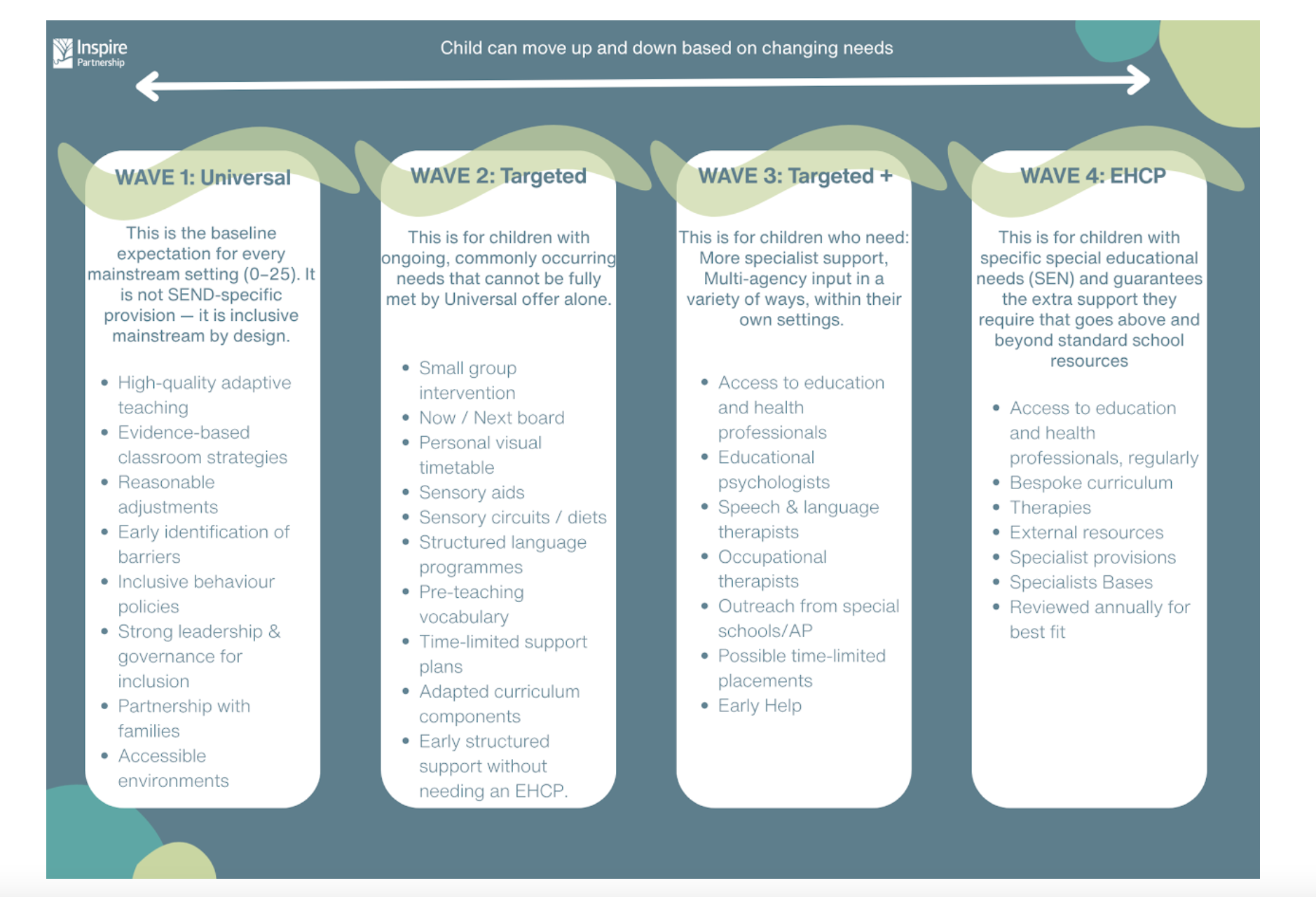
At Foxfield Primary, the identification of Special Educational Needs and Disabilities (SEND) is rooted in the principle that every teacher is a teacher of SEND. Our overarching goal is early identification and inclusive, high-quality provision to ensure all children can fully access a broad and balanced curriculum. We follow a clear approach to spotting needs, structured around a Graduated Approach that scales up support dynamically based on how a child responds to teaching and targeted strategies.
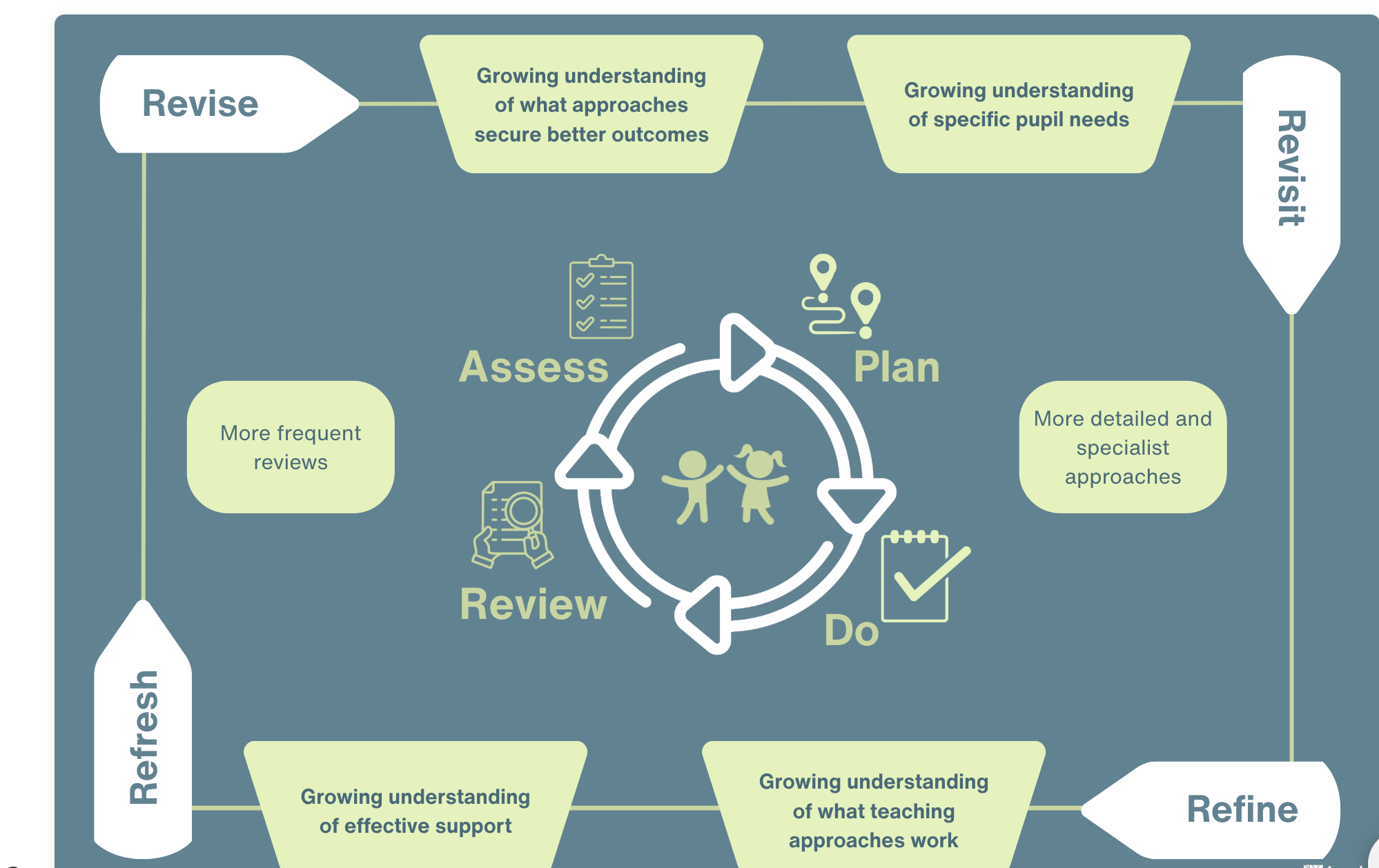
At Foxfield, our multi-stage Graduated Approach follows the statutory four-part cycle at every stage: Assess, Plan, Do, Review. This process is designed to be completely flexible so a child never gets "stuck" in a category. By constantly assessing and reviewing, we ensure that each child always receives the exact wave of support tailored to their needs at that specific moment in time. The most important part of our Graduated Approach happens during the Review stage. We never repeat a cycle blindly; instead, we actively revise our strategy based on how the child responded to the provision. If a pupil has made great progress, support can be adjusted accordingly, and if further targeted support is required, we seamlessly transition to the next wave to guide their ongoing journey.